Washing utensils with water fetched in jerrycans can significantly reduce water consumption in a school kitchen, compared with washing under a continuously running tap.
Most schools in Uganda do not have access to running water. A fixed quantity of water is brought to the kitchen, so the amount used is naturally limited.
The water source can be located at a considerable distance, and jerrycans of 20 litres capacity can be heavy to carry, so staff tend to be more careful about how much they use.
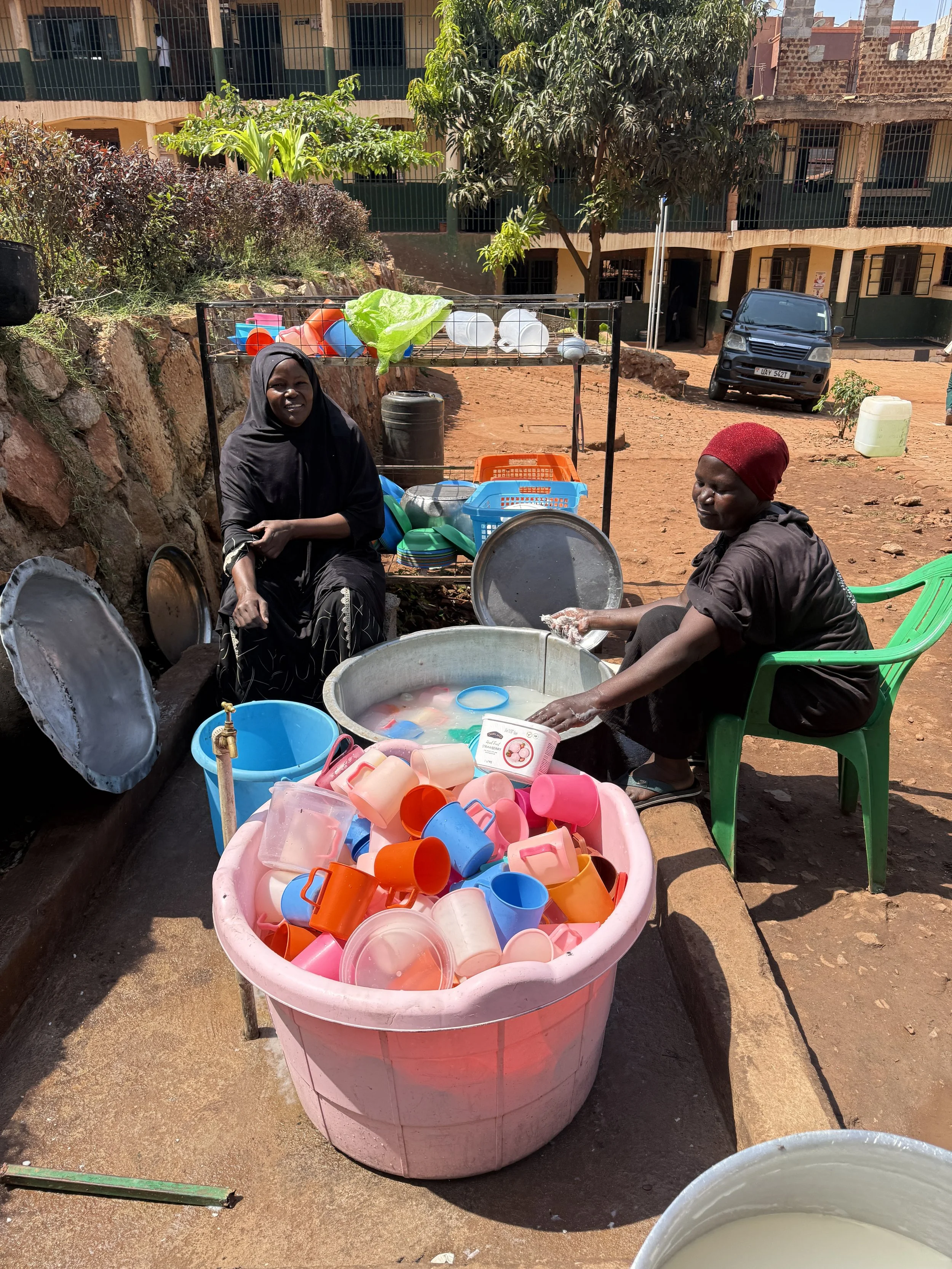
However, less water consumed does not necessarily mean the utensils are cleaned better. There needs to be enough water for proper washing and rinsing, adding an extra layer of work to the kitchen staff who can be very busy handling the firewood and tendering their improved cook stoves.
Working in a school kitchen is a demanding job, where both women and men share several responsibilities. Pressure mounts as several activities take place:
Cooking finishes – food must be checked, portions prepared and cooking equipment cleared.
Food is transferred – large pots or containers need to be moved to the serving area.
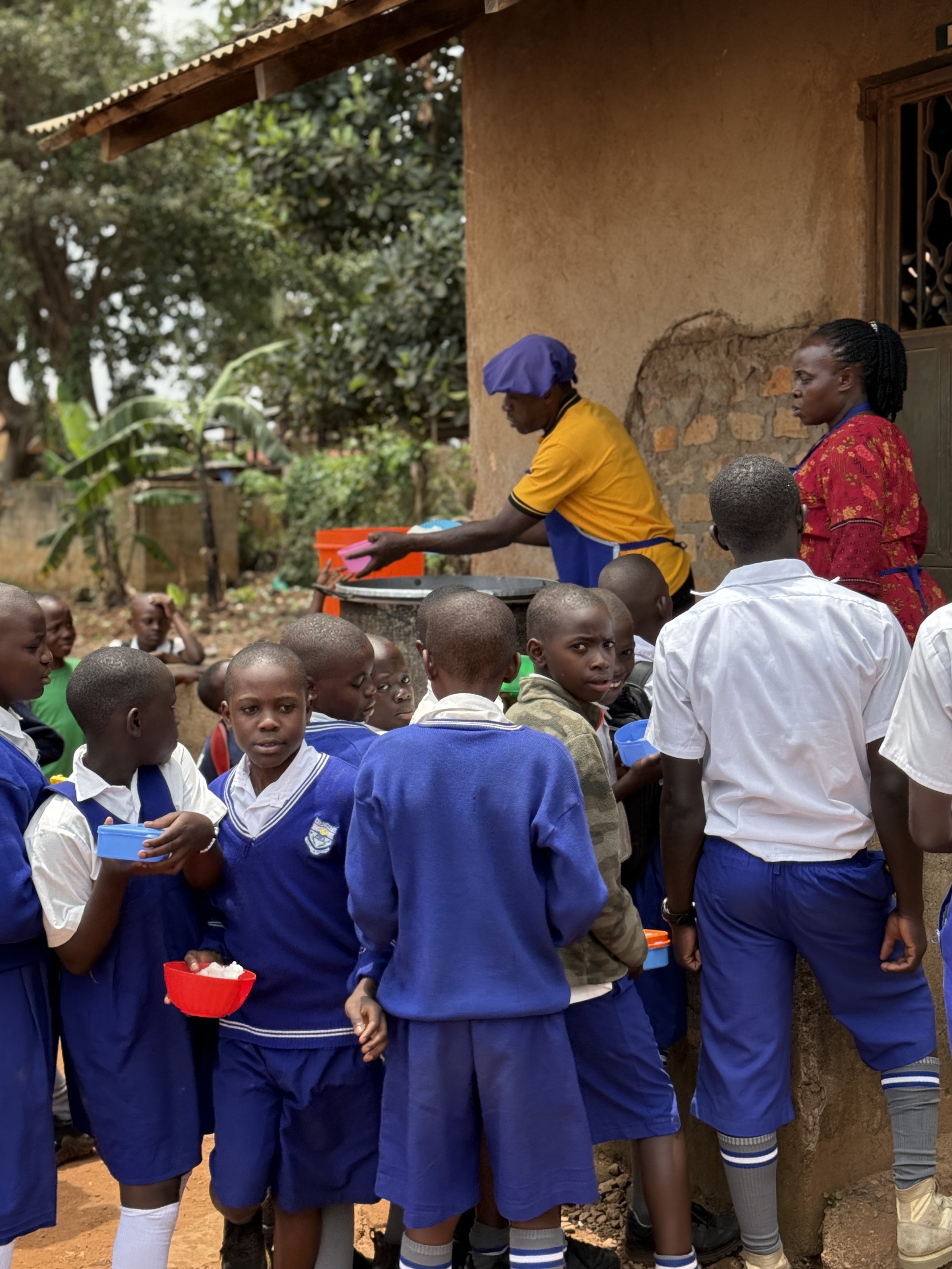
Students arrive in large numbers – sometimes hundreds of meals need to be served within a relatively short window.
Portioning and serving – cooks need to maintain reasonably consistent portions while keeping the queue moving.
Utensils are returned – plates, cups and spoons start coming back almost immediately.
Washing begins while serving continues – if there is limited water, cooks may have to fetch water in jerrycans and wash utensils in batches.
Cleaning and preparation for the next meal – the kitchen needs to be restored quickly, especially if lunch is followed by another cooking period.