
In almost every Ugandan school, the midday meal is a simple but powerful combination of beans and maize porridge or posho. Every day when visiting our schools, we cannot miss the opportunity of tasting this traditional combination. Beans are rich in protein, iron, and dietary fiber, nutrients that are critical for growing children who might otherwise face deficiencies. Iron-rich bean varieties introduced through biofortification programs have been shown to improve concentration and energy levels among learners, directly boosting academic performance.
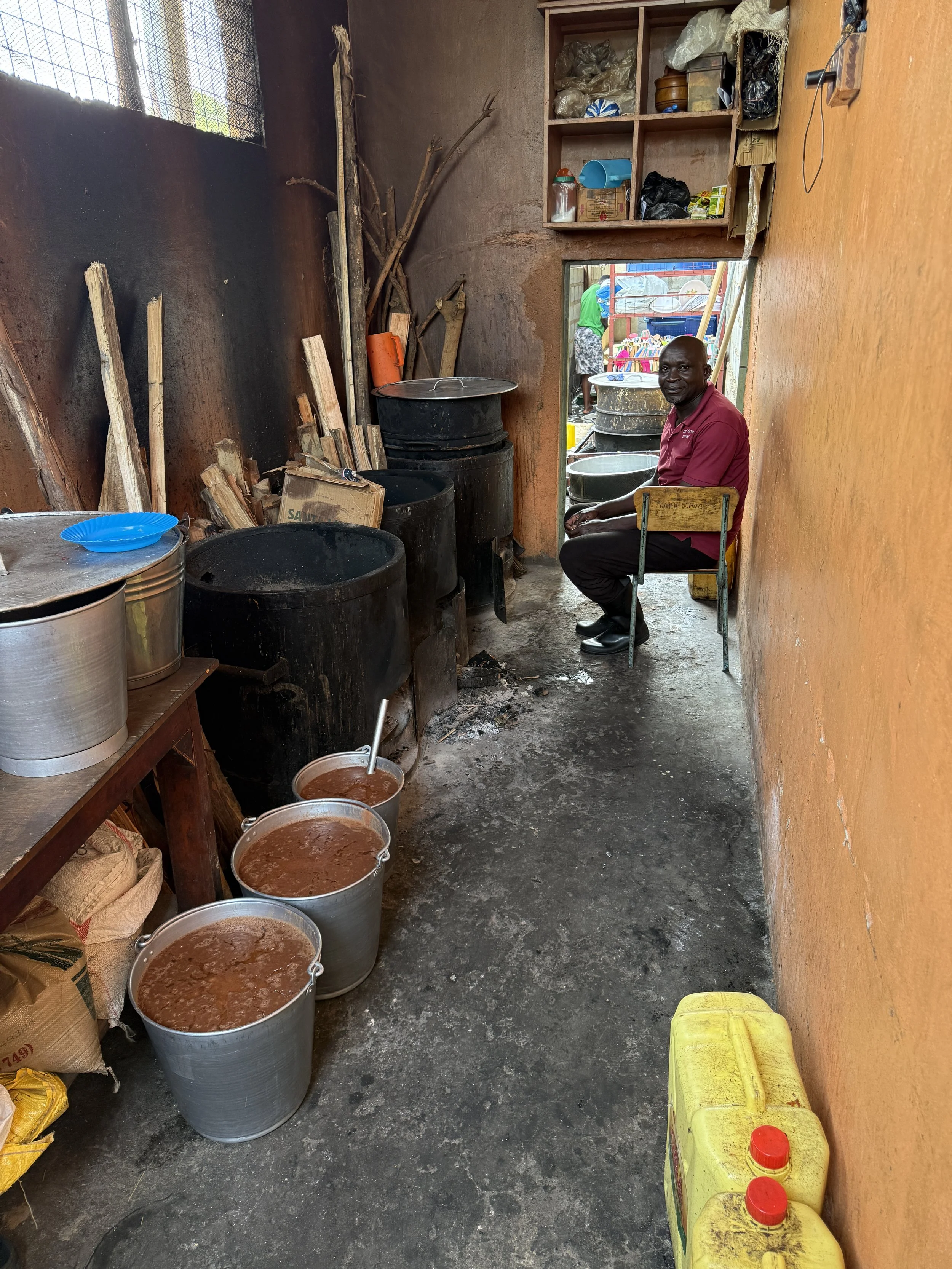
Beans in tomato soup ready to be served at lunchtime in a primary school in Katale, Kampala.
Economically, beans are a cost-effective staple. Unlike meat or fish, beans are affordable and widely available, making them a sustainable option for schools that often operate under tight budgets. Beans also serve as a bridge between schools and local farmers. School feeding programs create a reliable market for smallholder producers, encouraging them to grow more beans and diversify crops. This not only supports household incomes but also builds resilience against climate change, since beans are relatively hardy and adaptable to shifting weather patterns. In fact, improved bean varieties have reached millions of African households, and schools are key outlets for these crops.
Beans are so central to Ugandan diets that they are often referred to as “poor man’s meat,” yet they carry immense nutritional power.
Interestingly, schools sometimes allow families to offset tuition fees by contributing beans or maize. This practice turns food into a form of currency, keeping children enrolled while ensuring the school kitchen remains stocked. It’s a unique example of how food security and education are intertwined in Uganda.