
In Uganda, the story of recycled plastic bottles in schools is both practical and inspiring. Teachers and pupils take the familiar 20‑litre water bottles, often discarded as waste, and transform them into small garden pots. By cutting them open, filling them with soil, and arranging them neatly in rows or hanging structures, they create miniature gardens right in the schoolyard. These improvised pots become homes for spinach, tomatoes, amaranth, and herbs, turning unused corners of the compound into green, productive spaces. The children themselves often take part in planting and watering, learning not only about agriculture but also about the importance of reusing materials that would otherwise pollute their environment.
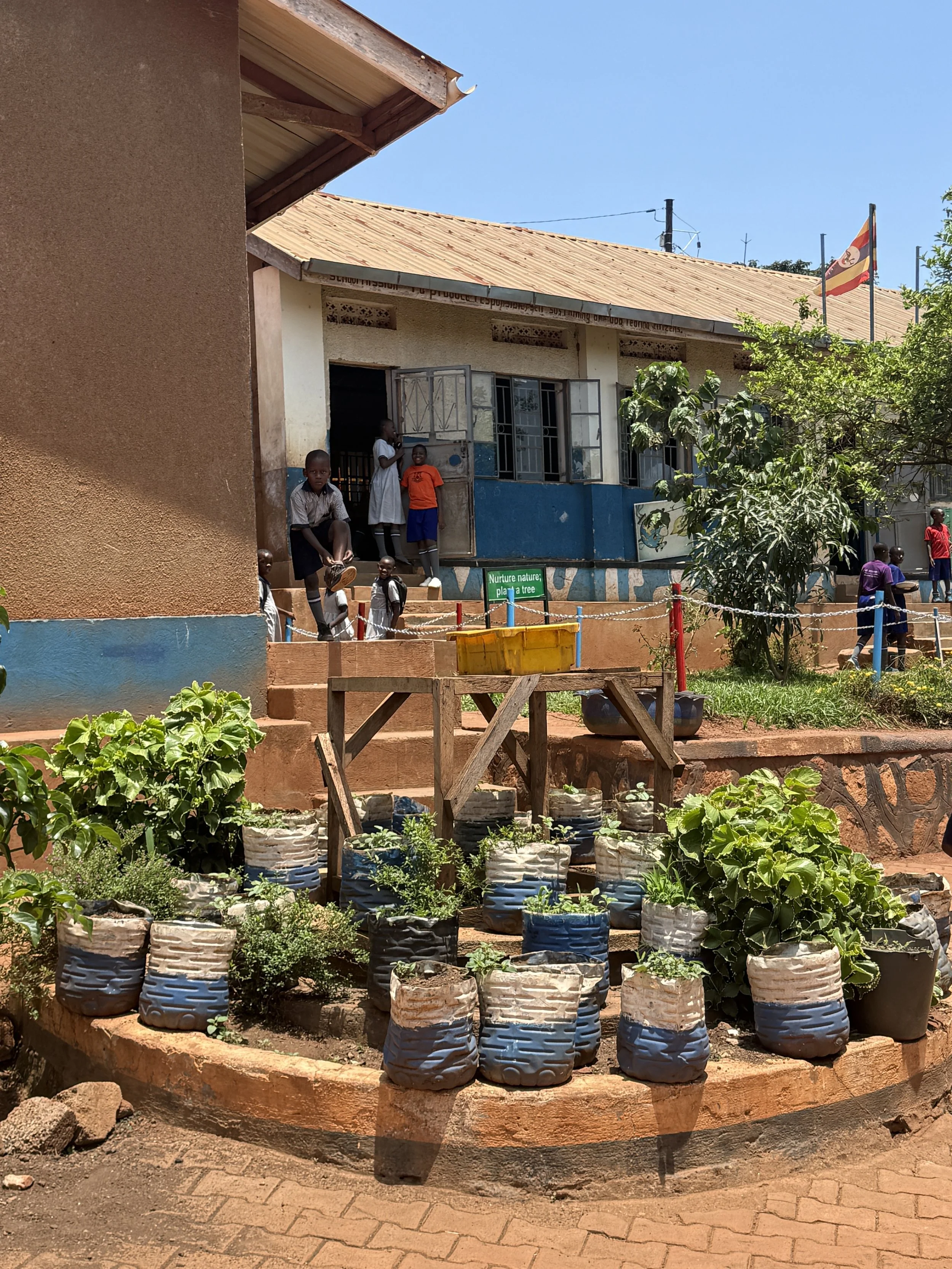
The impact of these bottle gardens goes beyond the vegetables they produce. They provide schools with a way to supplement meals, adding fresh greens to diets that are often limited to staples like posho and beans. At the same time, they reduce plastic waste and teach pupils about sustainability in a hands‑on way. For many schools, especially those with little land, this innovation has become a symbol of resilience and creativity. It shows how something as simple as a discarded container can be repurposed into a tool for nourishment, education, and environmental care, weaving together lessons in health, ecology, and community responsibility.